





Sir Winston Churchill is often credited with coining the phrase, “Never let a good crisis go to waste.” Few examples illustrate this wisdom more perfectly than the unlikely saga of the bottom-of-wall (BOW) joint in the firestop industry.
For over 30 years, I’ve watched our industry innovate with sophisticated, nuanced firestop designs from STI and others. These systems push boundaries and set new standards—almost always in an attempt to improve the simplicity and provide robustness to the fire containment solutions offered. Passing a tough test on one of these assemblies brings a genuine sense of accomplishment. Yet one humble system has long been undervalued and misunderstood: the bottom-of-wall joint. For many years, to use a golf term, it was the ultimate “gimme.”
Picture this: Your golf ball sits just a foot from the cup. You glance at your partner with that hopeful look and murmur, “Gimme?” If they’re a good sport, they nod. You pick up the ball, count the stroke, and stroll to the next hole—no risk of missing that easy putt. That’s exactly how BOW joints were treated for years. Simple. Forgiven. Overlooked.
Then, in 2024, everything changed. Suddenly, the BOW joint was no longer a gimme. It became the center of a surprising controversy.
The Crisis That No One Saw Coming
During the Committee Action Hearings for the 2027 International Building Code (IBC), a proposal emerged that would have removed the requirement to firestop any BOW joint not specifically designed for movement. If approved, this would have effectively eliminated firestopping for the vast majority of these joints. The proposal was initially disapproved as the code action committee found the language too broad. But a modified version advanced as a public comment and was approved at a subsequent hearing.
Without much warning, we were now facing a crisis. A crisis almost no one had anticipated, because who really pays attention to the humble gap at the bottom of a wall? Yet this moment of potential vulnerability created a golden opportunity—not just to defend the status quo, but to educate the industry, deepen our understanding, and highlight why these seemingly minor joints truly matter for building safety.
The clock was ticking loudly. The issue surfaced in October 2024, leaving the industry with a tight window to resolve this misunderstood joint. Public comments were due by March 2025. There was no time to waste. We needed hard data to prove what we instinctively knew: leaving these joints unprotected wasn’t just a minor oversight—it could compromise fire and smoke containment in real-world conditions.
Digging Deeper: The Hidden Importance of the BOW Joint
We began by examining standard practices and real-site conditions. The Gypsum Association’s GA-216 requires that gypsum panels be installed with a minimum ¼-inch gap above the floor. Contractors shared stories of seeing gaps expand to a full inch or more on a frequent basis. What looks like a tiny, inconsequential space on paper can become a significant pathway for fire and smoke when the stakes are highest.
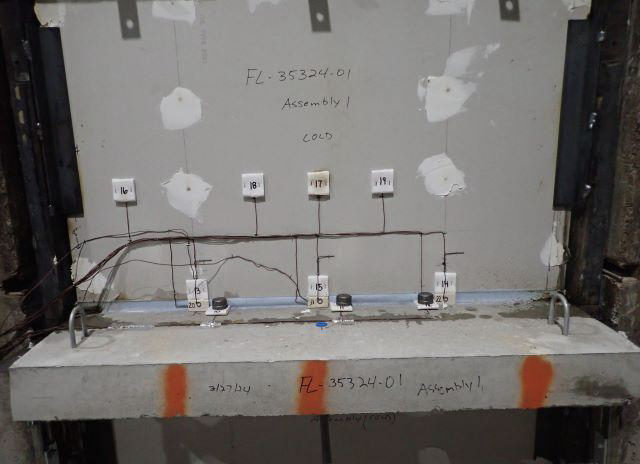
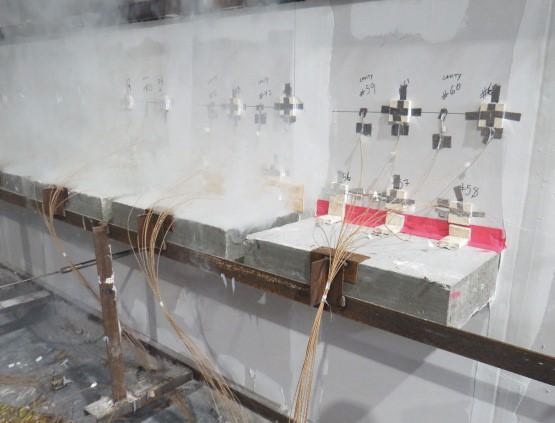
A group of leaders from the firestop industry launched an ambitious testing program: 19 different assemblies evaluated across five accredited fire test laboratories (certified for UL 2079 or operating under the UL Client Test Data program). The goals were clear—compare unprotected ¼-inch gaps, unprotected 1-inch gaps, properly firestopped joints, and the common issue of discontinuous bottom plates (frequently observed on actual job sites).
The Results Speak Louder Than Words
The outcomes were as predictable as they were compelling. All six tests incorporating approved firestop systems at the BOW joint sailed through the rigorous UL 2079 criteria. In stark contrast, the 13 tests with deviations—whether unprotected gaps of varying sizes or discontinuous stud plates—failed to meet the performance standards in every case, often dramatically.
These weren’t abstract lab curiosities. They mirrored the messy realities of construction sites everywhere: imperfect alignments, variable gaps, and discontinuous tracks. The data provided overwhelming evidence that BOW firestopping is far from a “gimme”—it’s a critical line of defense.
A United Industry Response
Leaders across the firestop industry rallied, channeling expertise into clear, evidence-based communications. The goal wasn’t just to kill the proposal but to elevate awareness of this often-ignored detail. Through technical bulletins, presentations, stakeholder meetings, and the compelling test results, the message resonated: Firestopping the bottom-of-wall joint isn’t bureaucratic red tape—it’s essential protection that safeguards lives and property.
In the end, the proponents of the original code change gracefully and thankfully withdrew their proposal. The BOW joint requirement remained intact, ensuring our buildings continue to progress through enhanced life safety.
Why This Matters - And What Comes Next
This reminds us that even the smallest details in fire protection can have massive impacts. The BOW joint story is more than a code battle; it’s a testament to the power of proactive industry collaboration, rigorous science, and a willingness to turn a potential crisis into lasting progress.
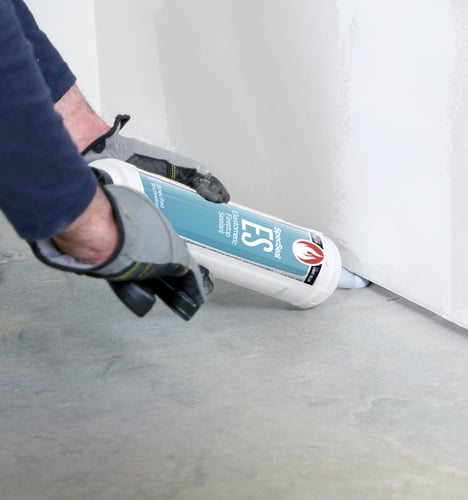
As we move forward with the 2027 IBC and beyond, let’s carry this momentum. Pay attention to the “gimmes”—because in fire safety, there’s no such thing as a free putt. Every joint, every seal, every system plays its part in the bigger picture of resilient, code-compliant construction.
The next time you see that modest gap at the bottom of a wall, remember: It might just be the one that needs firestopping most of all.
For more information on the bottom-of-wall testing program led by the International Firestop Council, please click here to access the Public Comment, the Test Report, the White Paper, and the supporting statement letter from Underwriter’s Laboratories. In addition, a special thank you is extended to Intertek for their outstanding support in helping our testing efforts.
This article, by Tim Mattox, Senior Manager of Systems & Testing Development, originally appeared in the Spring Wrap-Up 2026 edition of The Burn.